What the CPI Climate Finance Guide means for transport and resilience in supply chains

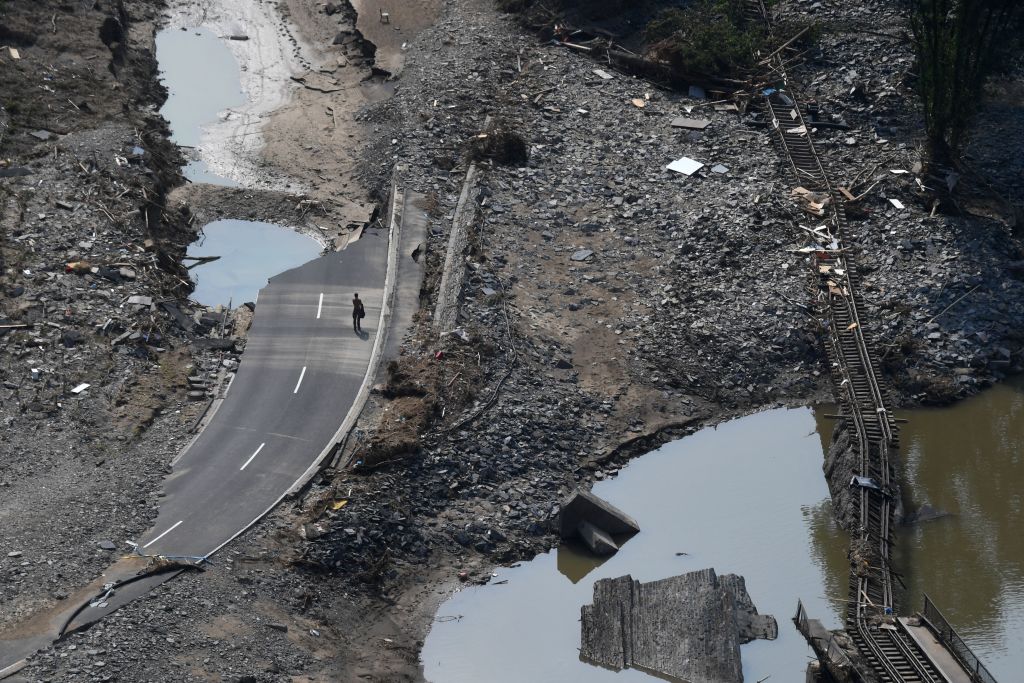
When the Climate Policy Initiative (CPI) guide on Assessing Climate Risk, Framing Resilience, and Reporting Impact – A Guide for Climate Finance Practitioners was published last week, I was curious to see how its three goals would translate to transport and logistics in supply chains.
The CPI Guide targets fund managers, investors and other finance practitioners to help them to manage physical climate risk and design “climate finance vehicles” in support of adaptation and resilience. Think of debt or equity funds, guarantees, or insurance.
What struck me is how naturally its focus on risk, beneficiaries and implementation connects with the Life-Links Framework, now available both as a downloadable pdf and as an online version. For example, its steps for assessing and managing climate risks explicitly list examples of transport assets, infrastructure and supply chain nodes: distribution centers and roads, transportation routes, cold chain logistics and downstream distributors
That made it straightforward to develop a crosswalk that applies the CPI goals and associated steps more explicitly to transport and logistics links. This crosswalk can be accessed here, and below I briefly explain it using the same three headings as the CPI Guide.
 Resource: CPI Guide applied to Transport for Resilient Supply Chains
A. Why it matters
Including transport and logistics is critical to the success of climate finance investments. Many climate investments apply to a clearly defined location or activity, such as a mine, factory, farm, or power plant. In those cases, beneficiaries (stakeholders and actors) are relatively easy to identify, risks are tied to a place, and roles and responsibilities are clearer.
Transport and logistics links are different. A road, a port terminal, a rail segment, or a logistics hub typically serves many supply chains at once. Benefits of adaptation investments are therefore spread across multiple stakeholders rather than benefiting a single company or actor.
As a result, transport and logistics links are often not considered explicitly in climate risk assessments, adaptation planning, or climate finance. This reflects a familiar issue in the Life-Links Framework: transport and logistics often belong to no one in particular, even though many depend on them. That market failure helps explain why transport and logistics frequently become the weakest part of climate risk assessments and climate finance investments, despite being central to supply chain performance.
B. How to do it
The CPI Guide provides guiding steps and advice under three goals:
CPI Goal 1 focuses on assessing and managing climate risk. For transport and logistics, this requires looking beyond physical infrastructure to also consider operations, workforce, and the flow of goods, finance, and data, as well as the stakeholders that depend on them. It also requires explicitly identifying and prioritizing the critical transport or logistics link(s) within a supply chain, recognizing that not all links can be assessed in depth, particularly in complex, multi-tier supply chains.
CPI Goal 2 focuses on defining how and why an investment strengthens climate resilience. For transport and logistics, this means being explicit about why strengthening a specific transport or logistics link matters beyond the asset itself, and how it reduces vulnerability across supply chains. The Life-Links Framework supports this by describing resilience in transport and supply chains through nine concrete attributes: sourcing, intermodality, redundancy, scheduling, diversity, visibility, workforce, cyber/digital, and protection of goods in transit.
CPI Goal 3 focuses on impact measurement and reporting that captures adaptation and resilience outcomes. For transport and logistics, this is often the most challenging part, because benefits are shared across many supply chain stakeholders rather than sitting with one actor. Impact measurement therefore needs to make these shared benefits visible, while recognizing that not all supply chains can be assessed in depth. Data availability is a further constraint. For transport and logistics, data is often limited because responsibility is fragmented across multiple stakeholders, and data sits in different places.
C. Outputs and resources
Using the CPI Guide together with the Life-Links Framework helps strengthen concrete outputs across the investment cycle (as set out in the CPI Guide), in particular:
- Risk assessment that more consistently includes transport and logistics systems and their stakeholders within climate investment pipelines.
- Risk management plan and adaptation action packages that explicitly include measures to strengthen transport and logistics links, with a clearer rationale for investors.
- Adaptation and resilience investment thesis that is stronger because it reflect benefits created at the level of transport and logistics that affect the resilience of broader supply chains and value chains.
- Impact measurement and reporting strategy that looks beyond individual stakeholders to capture supply chain and logistics resilience as a shared outcome, making follow-through by investors and supply chain actors more likely.
We will be using this crosswalk in our own work, alongside the CPI Guide and the Life-Links Framework. It is intended as a practical resource for people working at the intersection of supply chains, transport, and climate finance.
I welcome any feedback, especially from climate finance practitioners out there!