Part B. Life-Links Framework
B-2. Building on Existing Guidelines and Tools
Approaches to assess supply chain risks and determine responses vary widely by stakeholder, often focusing on single actors or regions with fragmented objectives. Broadly speaking, two types of tools and guidelines are distinguished.
On the one hand, sophisticated commercial tools target mainly multinationals and combine predictive analytics and AI to manage their supply chains and risks, usually without considering other supply chain users or beneficiaries. Many of these focus on locations, while transport and logistics – the backbone of supply chains – are often overlooked.
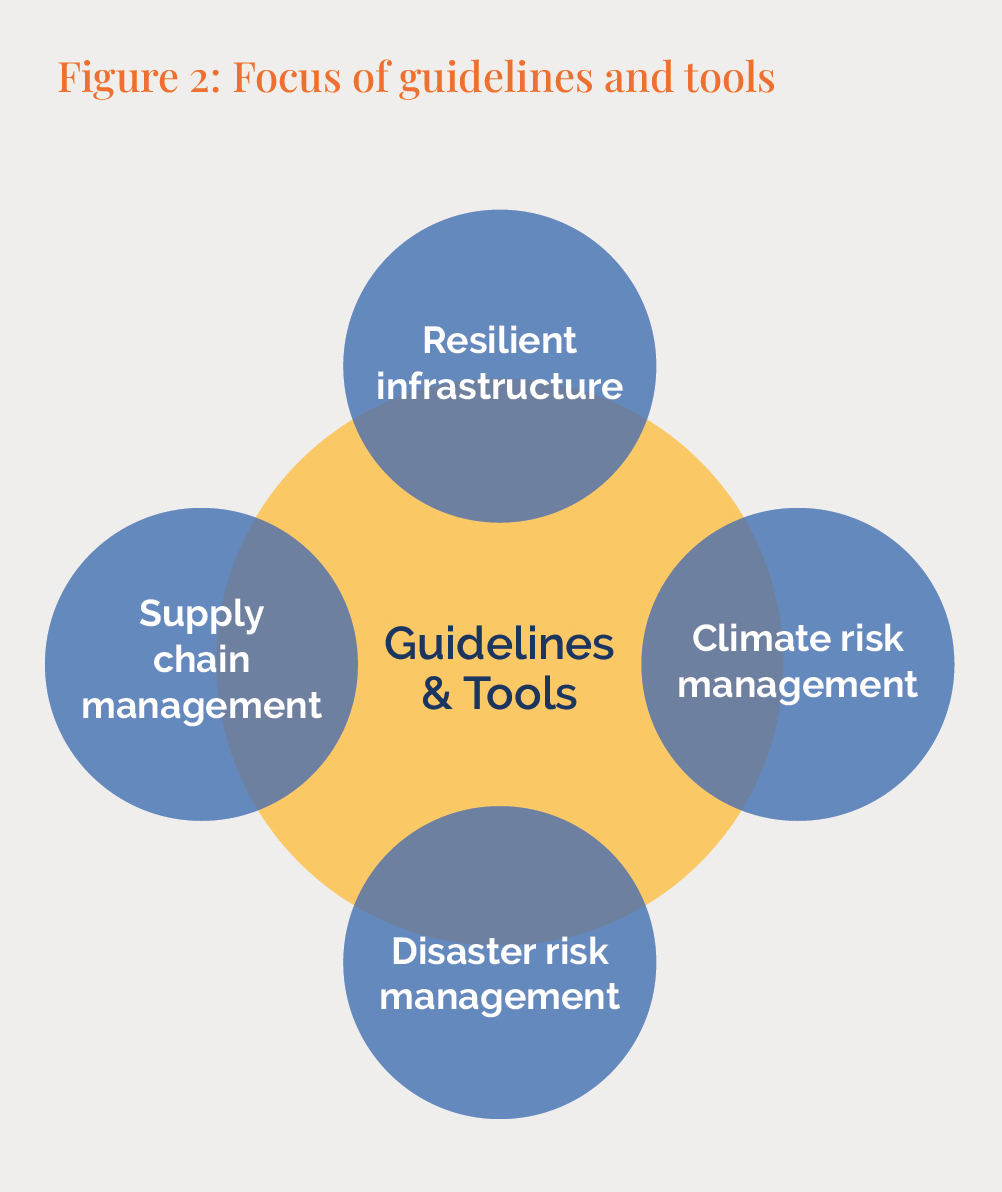
On the other hand, multiple guidelines and tools by development agencies, insurers and other organizations focus on resilience of (national) infrastructure, such as roads or ports, climate risk assessment and management, disaster risk management, including overlaps. However, these often omit supply chains and supply chain actors.
This siloed approach leaves gaps, weakens resilience, and slows progress on climate and sustainability goals. A common framework would unite stakeholders, integrate transport and logistics, and enable coordinated action to build more resilient and sustainable supply chains.
 Part D-5: Guidelines and Tools