Part C. Life-Links Steps
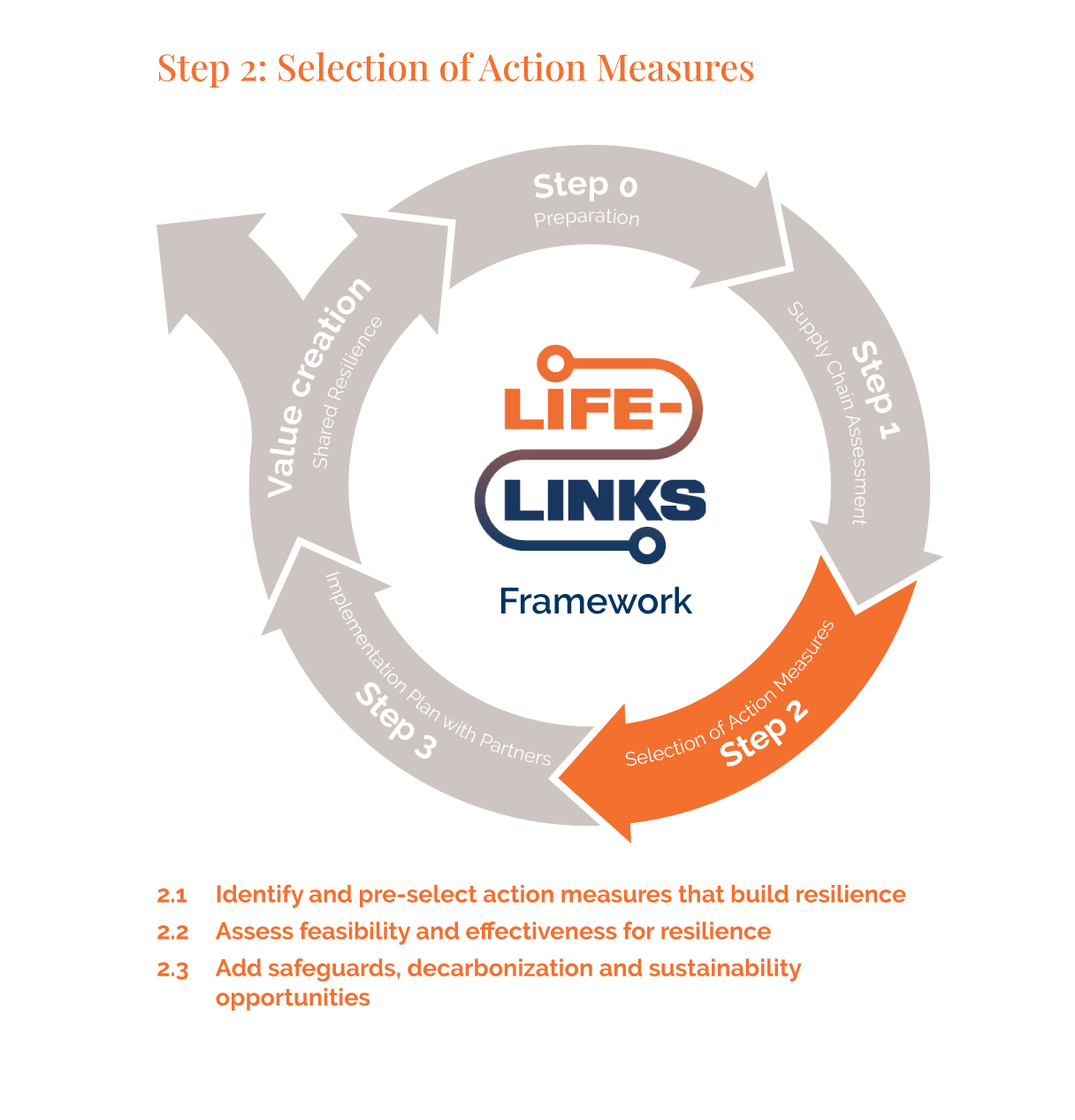
Step 2. Selection of Action Measures
Outcome: a feasible and resilience-effective package of proposed measures for the critical transport links, with opportunities for decarbonization and sustainability
Introduction: Mitigation, adaptation, sustainability
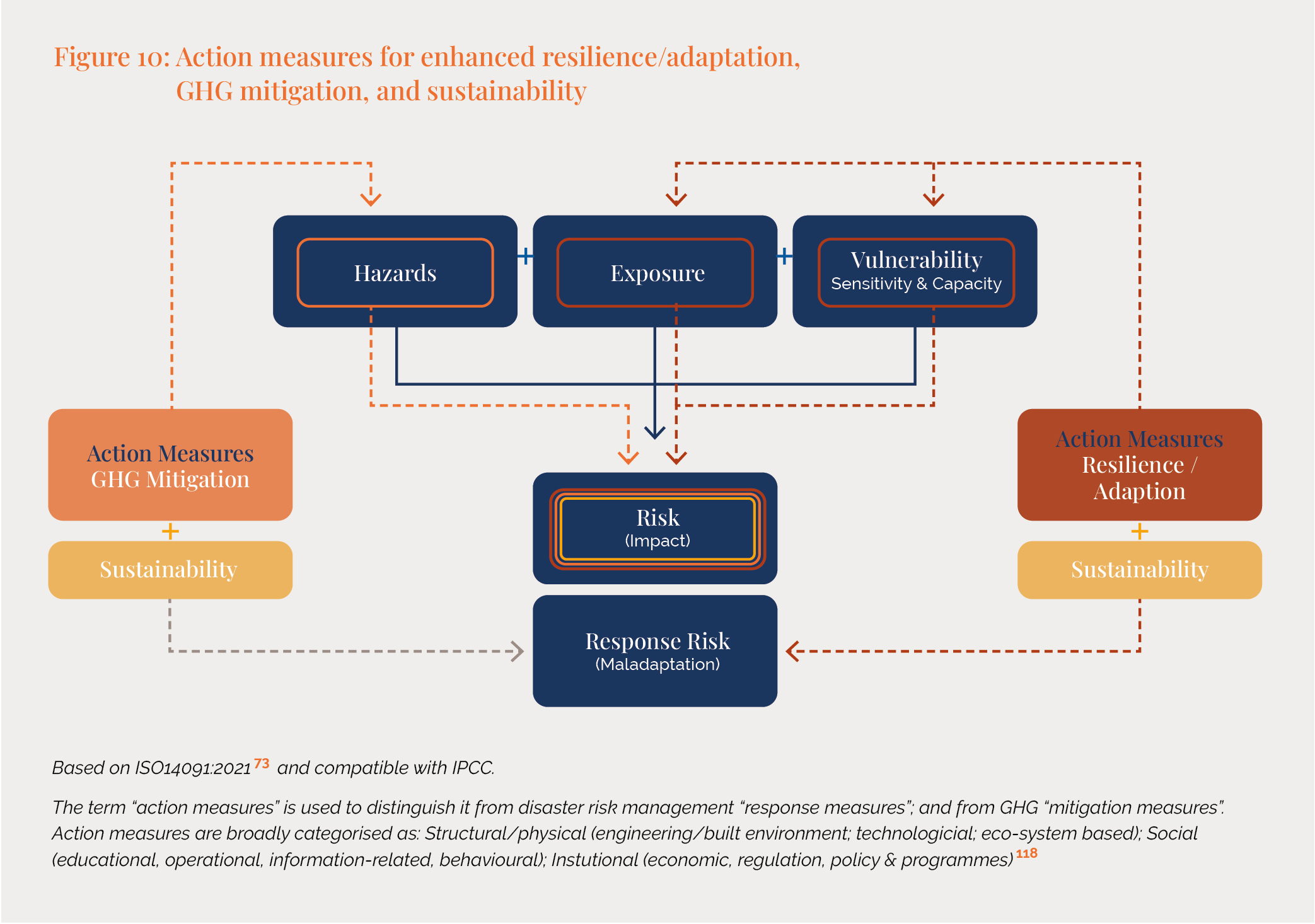
Figure 10 shows the importance of an integrated approach to mitigation and adaptation. Resilience or adaptation measures reduce the exposure and/or vulnerability of the logistics system, whereas GHG mitigation measures reduce the climate hazards or causes of climate change. Opportunities to improve sustainability can be combined with other measures, although this is not always easy in practice.
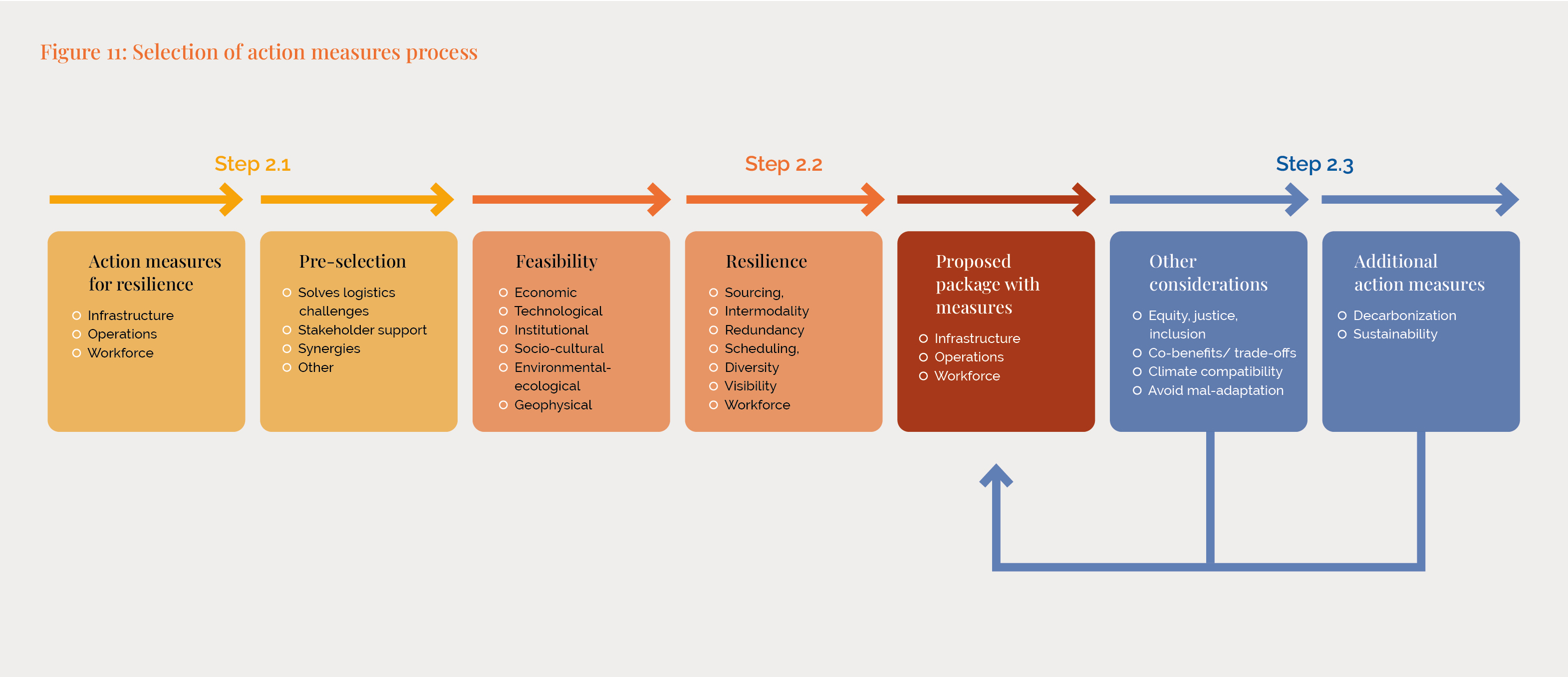
In this step, potential action measures are identified, screened, and analyzed in detail to create a feasible, resilience-effective, and future-proof package. The process begins with compiling and pre-selecting action measures aimed at improving resilience (sub-step 2.1). These are then assessed for feasibility and resilience effectiveness, including checks for maladaptation risks (sub-step 2.2). Finally, the package is enhanced by applying considerations such as equity, justice, and inclusion, and by actively seeking additional opportunities for decarbonization and wider sustainability (sub-step 2.3).
2.1 Identify and pre-select action measures that build resilience
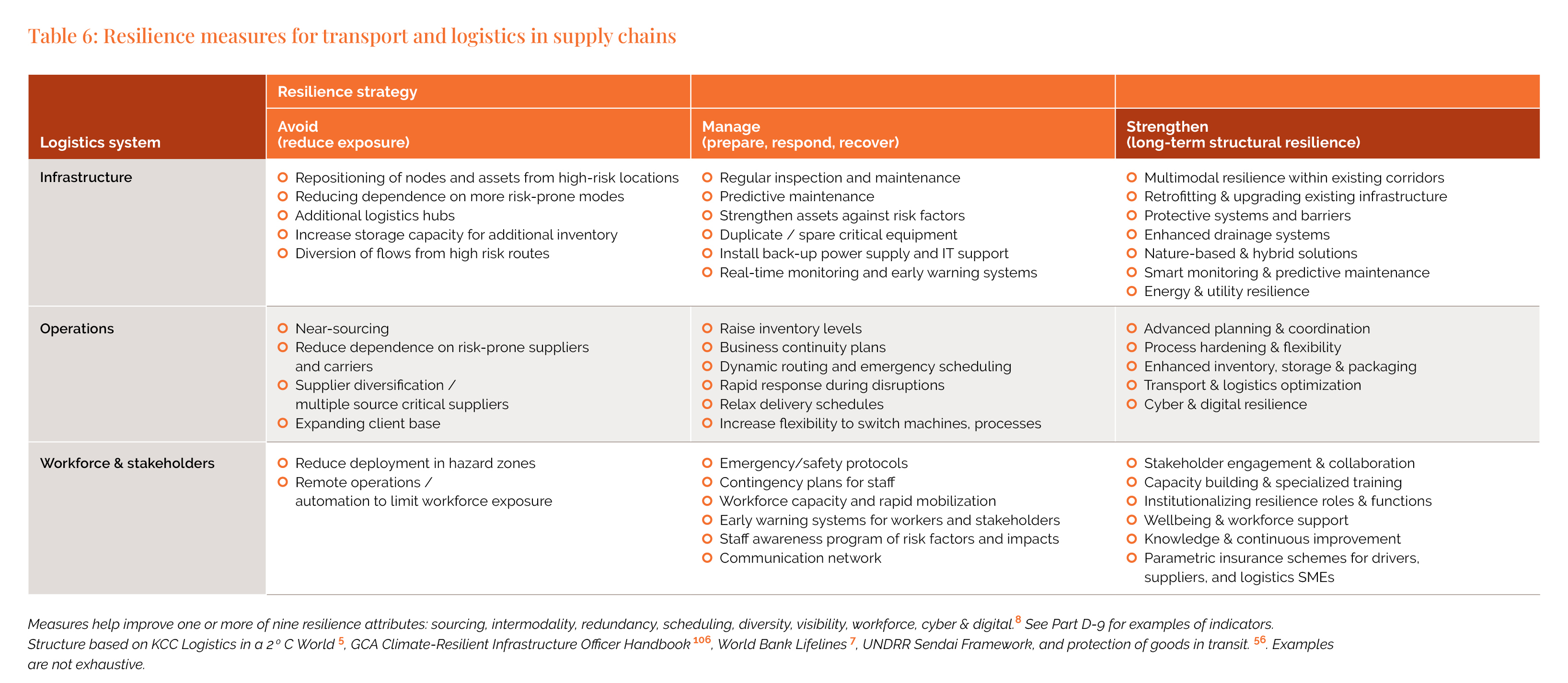
Develop a long list of potential measures, screen them against logistics challenges and stakeholder benefits, note synergies, and make a pre-selection for further analysis. Table 6 shows examples of measures across three main strategies for dealing with risks in logistics systems:
- Avoid focuses on reducing exposure by redesigning supply chains to bypass hazards altogether.
- Manage involves accepting that hazards will occur and emphasizing the ability to prepare, respond, and recover. This approach aligns with the stages of disaster risk management: before (prevention and preparedness), during (response), and after (recovery).
- Strengthen seeks to address underlying vulnerabilities within the logistics system itself, improving resilience across existing routes and its transport modes and logistics hubs.
Life-Links prioritizes measures within the strengthen strategy. The focus lies on enhancing long-term, structural resilience by addressing the root causes of disruptions in logistics systems, rather than pursuing strategies of avoidance.
Resilience at the transport, logistics or supply chain level is characterized by nine attributes or aspects that these measures help improve (7-9 are newly added):8
- Sourcing: average distance freight consignments move in a supply chain, SCE or trip, and how far and from where goods are procured.
- Intermodality: extent to which using different transport modes spreads disruption risk, and the ability to switch modes before or during disruptions.
- Redundancy: amount of spare capacity and inventory in the logistics system to buffer interruptions to the flow of goods.
- Scheduling: degree to which production and logistics processes are synchronized (e.g. just-in-time, replenishment) and flexibility in timing and coordination of flows.
- Diversity: range of options available for routing freight, suppliers, carriers, clients, or energy sources.
- Visibility: degree of supply chain and supplier visibility; stakeholder awareness and capacity, and the nature and speed of communication about disruptions.
- Workforce: capacity, safety, wellbeing, and awareness of logistics workers, contractors and suppliers in managing disruptions.
- Cyber and digital: robustness of digital systems, data, and communications against cyber attacks, system failures, and data breaches.
- Protection of goods in transit: the degree to which goods are safeguarded against damage, spoilage, contamination, theft, or loss during transport, handling, and storage.
In practice, most resilience measures are multi-functional, strengthening more than one attribute at a time. For example, diverting flows from high-risk routes reflects diversity by using alternative routing options, but it also depends on redundancy in the network – spare or parallel capacity that allows rerouting. Similarly, solar-powered cold storage provides redundancy (backup energy), creates diversity (an alternative power source), and enhances visibility when digitally monitored.
a. Compile a list of potential measures
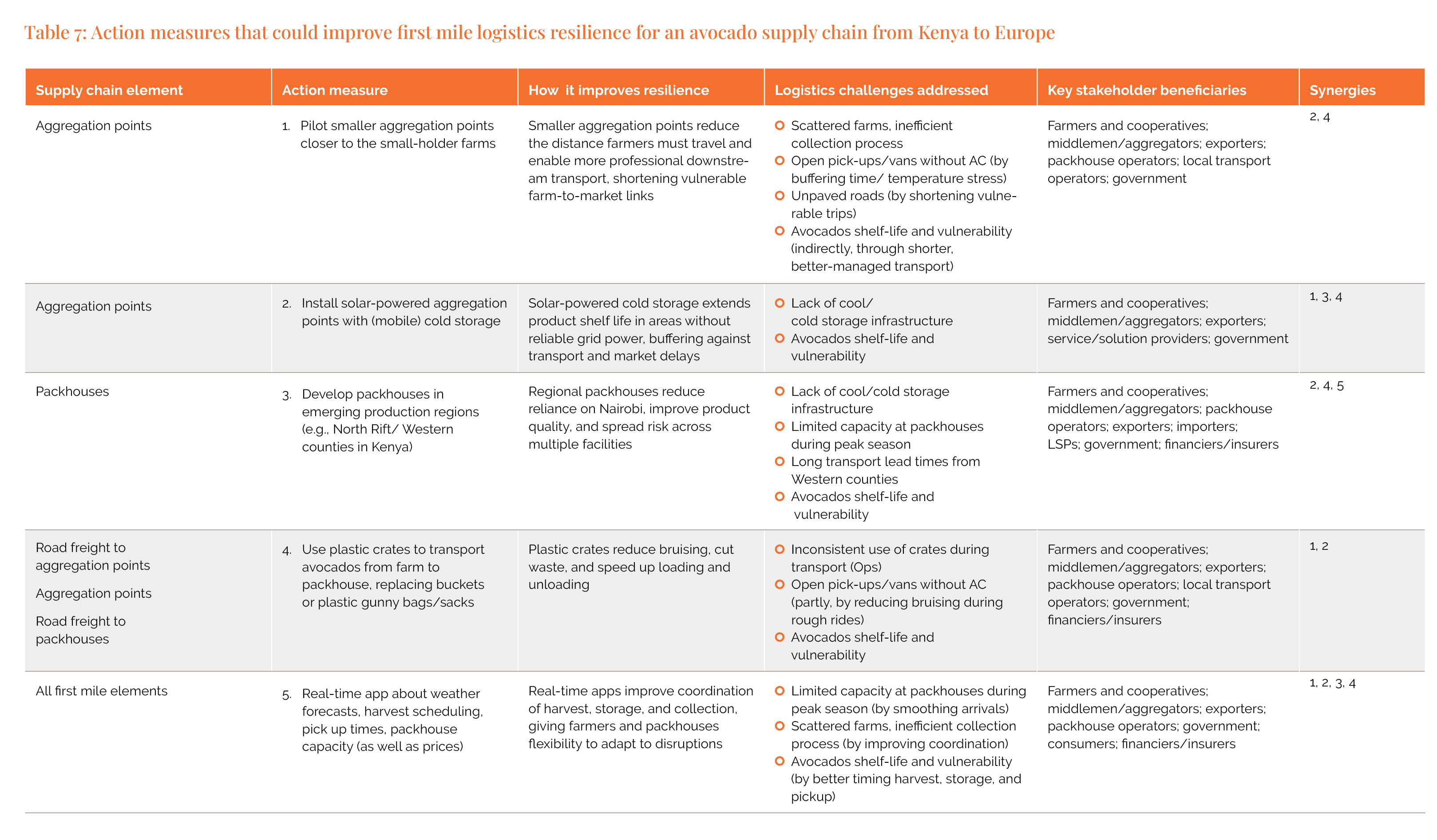
Start by compiling a long list of measures to improve resilience to supply chain disruptions at the logistics-system level. Use Table 6 and the resource on Resilience Measures for guidance. Gather ideas from research, best practices, and stakeholder input relevant to the critical link to create a list of measures that different actors can lead (for example, for avocados, see Table 7). At this stage, the focus should be on identifying structural/physical and social measures, while supplementary institutional measures are addressed later in Step 2.3.
 Resource: Resilience Measures that Strengthen Existing Routes
Case Study Australia: Improving resilience of road and rail freight networks after Australia’s bushfires
Resource: Resilience Measures that Strengthen Existing Routes
Case Study Australia: Improving resilience of road and rail freight networks after Australia’s bushfires
b. Check relevance to logistics challenges, stakeholders and synergies
Make a qualitative assessment of (see Table 7 as an example for the avocado supply chain):
- Logistics challenges: whether the potential measures address the right logistics challenges.
- Stakeholder beneficiaries: who are the main supply chain actors and stakeholders who would benefit.
- Synergies: if measures within the same or in different SCEs can be combined for greater collective resilience. For example, aggregation points closer to farms can be combined with the use of plastic crates for safer transport and solar-powered mobile cold storage units that can extend the shelf life of fresh produce.
It may be more effective to do this early, right after compiling the measures, so that pre-selection is guided by solving real problems, meeting stakeholder priorities, and combined measures for greater collective resilience.
c. Pre-select action measures
Based on the screening, pre-select the most promising action measures. This can be done qualitatively using pragmatic criteria, such as:
- Problem-solving: directly address priority logistics challenges, reducing vulnerabilities identified in Step 1.
- Stakeholder support: have strong stakeholder backing, especially from those likely to finance or implement them.
- Quick wins: are operationally straightforward and lower cost, offering near-term impact (e.g., research suggests that each additional dollar spent on road maintenance saves USD1.50 in new investments.7).
- Proven to work: have been tested in practice, either in the existing supply chain or elsewhere, and show potential for scaling. For example, a Uganda exporter already uses sealed fermentation drums that allow cherries to begin processing safely at the farm and during transportation by motorcycle down the mountain, avoiding molding issues in case of disruptions.5 This option might be scaled to multiple farms or even across a coffee region. Another example is parametric insurance that has been proven to work for smallholder farmers (see Case Study) and could be replicated or expanded to transport operators.
- Synergies: work effectively in combination with other measures, strengthening the overall package.
For example the postharvest assessment of the avocado supply chain in Kenya 148 together with Wageningen University deepends the feasibility analysis and recommends two interventions to strengthen first-mile performance and together can improve farmgate prices for farmers, increase volumes and quality consistency for exporters, and enhance Kenya’s reliability as a supply origin for European importers.
- Aggregation centers, managed by cooperatives or farmer groups, can improve collection, handling, and short-term storage conditions by providing shaded, ventilated spaces, while also serving as crate banks and training hubs.
- A crate-management company, operating as a shared logistics service, can ensure access to affordable, reusable plastic crates through rental or leasing models, replacing the widespread use of sacks that damage fruit and reduce quality.
Pre-selected measures are then carried forward to Step 2.2, where their feasibility, effectiveness for resilience, and broader impacts are assessed in more detail. In the avocado example, all five first-mile measures scored sufficiently well across these criteria and were therefore retained for detailed assessment.
Case Study India: Parametric insurance for smallholder women farmers
2.2 Assess feasibility and effectiveness for resilience
Once potential measures have been pre-selected, the focus turns to whether they are both practically feasible and genuinely effective in strengthening resilience, while avoiding maladaptation risks. The outcome of this step is a set of action measures that combine high feasibility across multiple dimensions, robust resilience outcomes, and the strongest returns on investment.
The process is not strictly linear. Measures that score highly on resilience may require revisiting their feasibility, and combinations of measures may change the overall assessment. Likewise, when cross-cutting filters and sustainability opportunities are applied in Step 2.3, this may lead back to re-examining feasibility or resilience effectiveness to refine the package.
Consistent with the partnership focus of Life-Links, the analysis should incorporate the perspectives of diverse stakeholders and actors, rather than being limited to a single-actor lens (e.g., one company).
a. Assess feasibility across multiple dimensions
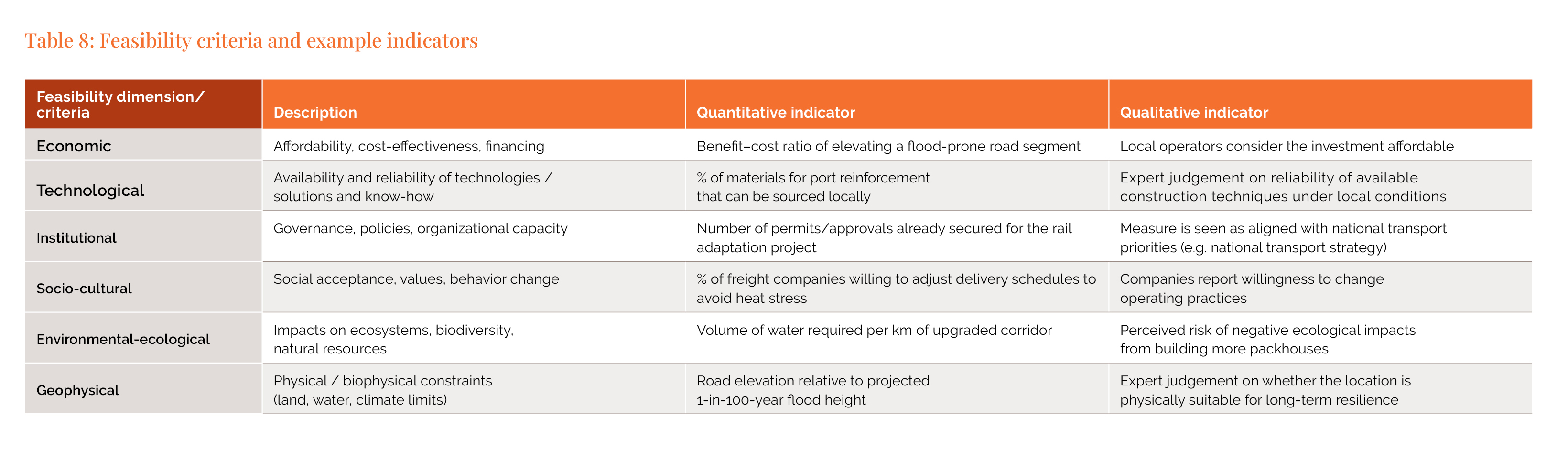
Conduct a multi-dimensional feasibility assessment of each action measure, using the methodology described by the IPCC.78, 79 Begin by selecting feasibility dimensions or criteria (see Table 8), which may vary between projects or leading actors, recognizing that feasibility is context dependent and may change over time. For each dimension, apply quantitative and/or qualitative indicators to determine feasibility. One useful approach is to assign each measure a score (e.g., low/medium/high) for each dimension, with optional weighting to produce an overall score.
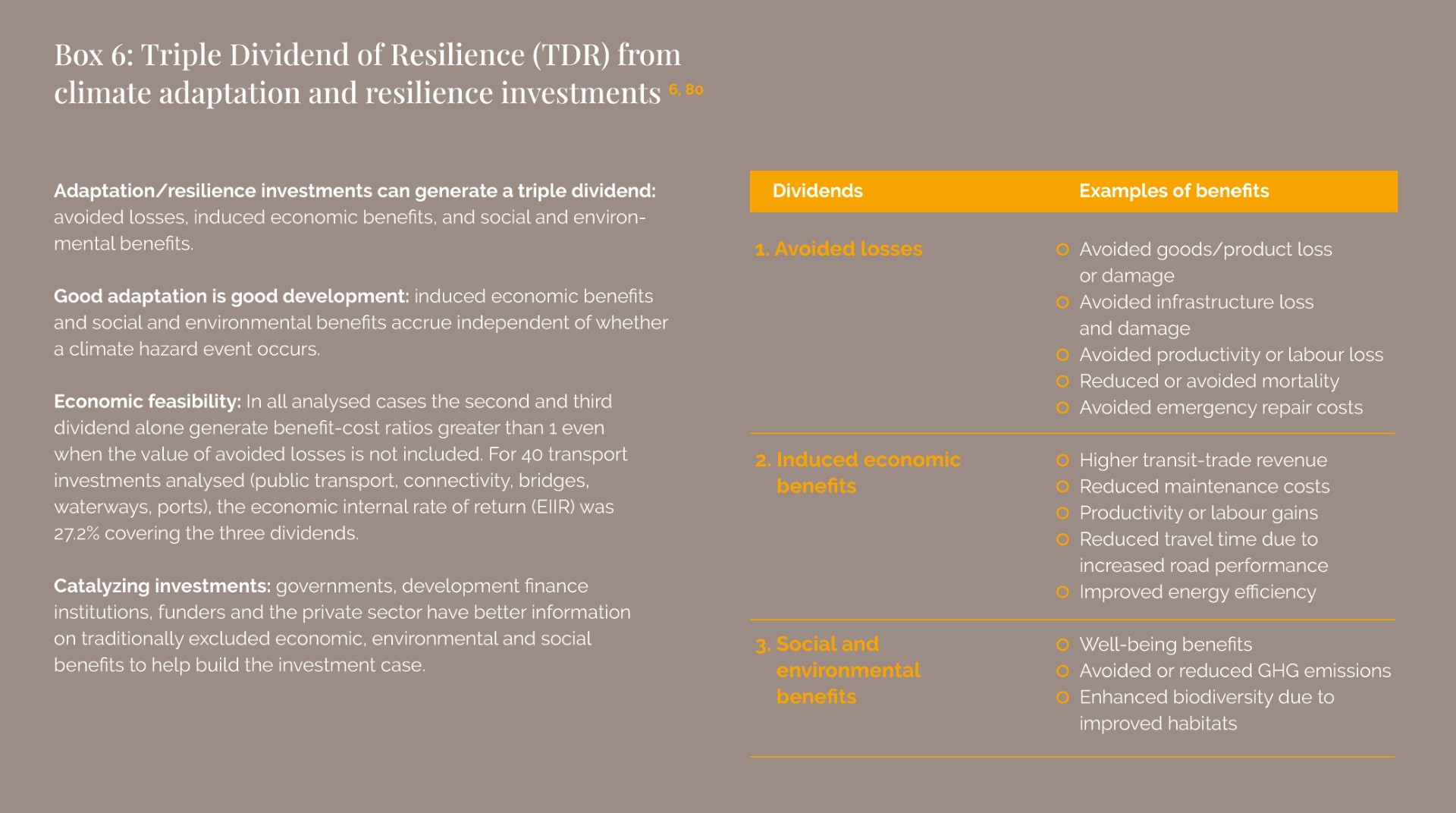
Given the importance of building the case for investment and address market failures, it is recommended to integrate the ‘triple dividend for resilience’ (TDR) approach into the feasibility analysis (see Box 6). For example, an expressway rehabilitation in Manila, Philippines delivered additional dividends such as reduced congestion that allows more efficient business operation; alerts from the traffic management system for the whole population on weather and traffic congestion; and roadside trees that sequester carbon dioxide.80
b. Evaluate effectiveness for resilience
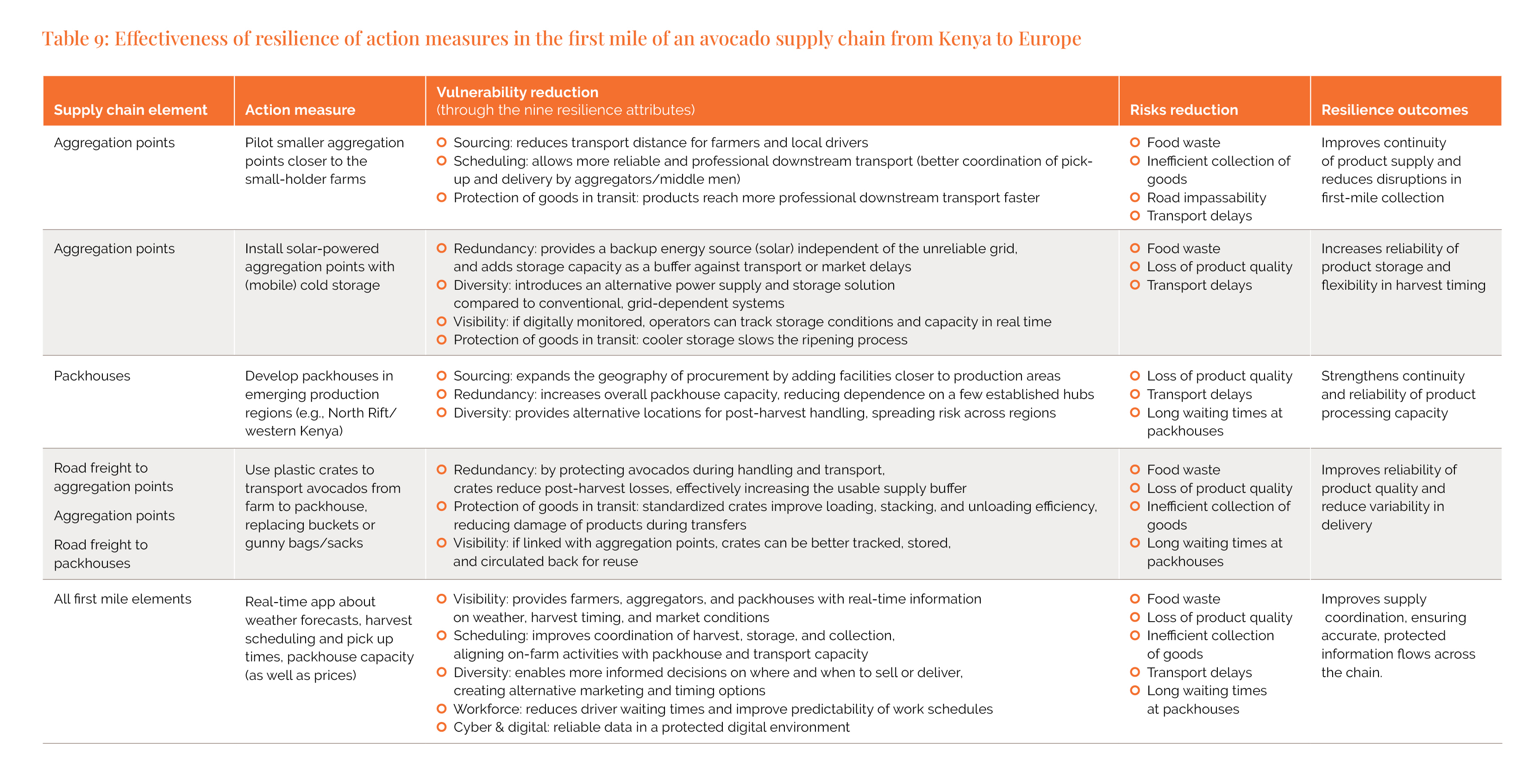
Effectiveness is the extent to which an adaptation measure reduces climate-related risks, impacts, or vulnerabilities, and strengthens resilience — both in the short term and under future climate conditions, and across relevant stakeholder groups. It is also context-specific: it depends on whose risks and which climate hazards are being targeted. Table 9 gives an example for the avocado supply chain.
Assess the effectiveness of pre-selected action measures against the IPCC framing of resilience:81
- Vulnerability reduction: determine which of the nine resilience attributes are strengthened (sourcing, intermodality, redundancy, scheduling, diversity, visibility, workforce) 8. Example: reduced travel distances for local drivers and protection of goods in transit.
- Risk reduction: identify which previously assessed risks are lowered. Example: avoided downtime of freight corridors, reduced cargo loss.
- Resilience outcomes: assess system-level benefits such as improved reliability, continuity, and flexibility of logistics systems under climate stress.
Identify measurable indicators where possible, like was done as part of the feasibility analysis. These may be quantitative (e.g., % reduction in kilometres travelled, days of disruption avoided) or qualitative (e.g., stakeholder perceptions of improved reliability of supply).
Where possible, take broader considerations into account by checking:
- Efectiveness in the short-, medium-, and long-term (e.g., next year, 2030, 2050).
- Robustness under uncertainty (e.g., a measure may be effective in 2030 but fail under 2050 sea-level rise).
- Durability under multiple climate scenarios.
Assess whether a measure that appears resilience-effective might in fact undermine long-term resilience or have other unintended consequences.
This is referred to as maladaptation – for example, an elevated freight railway that diverts floodwaters into nearby villages, increasing local flood risk. Because maladaptation overlaps with broader concerns such as climate-compatibility and equity, it is introduced here but explained in more detail in Section 2.3.
Resource: Examples of Metrics and Indicators
c. Select a package of proposed measures
Select a core package of action measures that combine high feasibility across multiple dimensions, robust resilience outcomes, and the strongest returns on investment. Selection involves comparing individual measures and combining those that reinforce each other across infrastructure, operations, and workforce.
At this stage the focus remains on feasibility and resilience effectiveness, with maladaptation risks explicitly avoided. Broader cross-cutting filters such as equity, inclusion, and climate-compatibility are applied in step 2.3 to further strengthen and safeguard the package.
The selected package is further refined in Step 2.3 to avoid unintended risks and capture additional benefits.
Case Study: Digitizing coffee payments in Uganda – a logistics measure with multiple benefits
2.3 Add safeguards and decarbonization and sustainability opportunities
Once a core package of feasible and resilience-effective measures has been identified, the next step is to safeguard it against unintended risks and add complementary opportunities for decarbonization and sustainability. This step produces an updated package that is protected against maladaptation and inequities, and strengthened with the most compelling opportunities for decarbonization and sustainability, ensuring it is both resilient and future-proof.
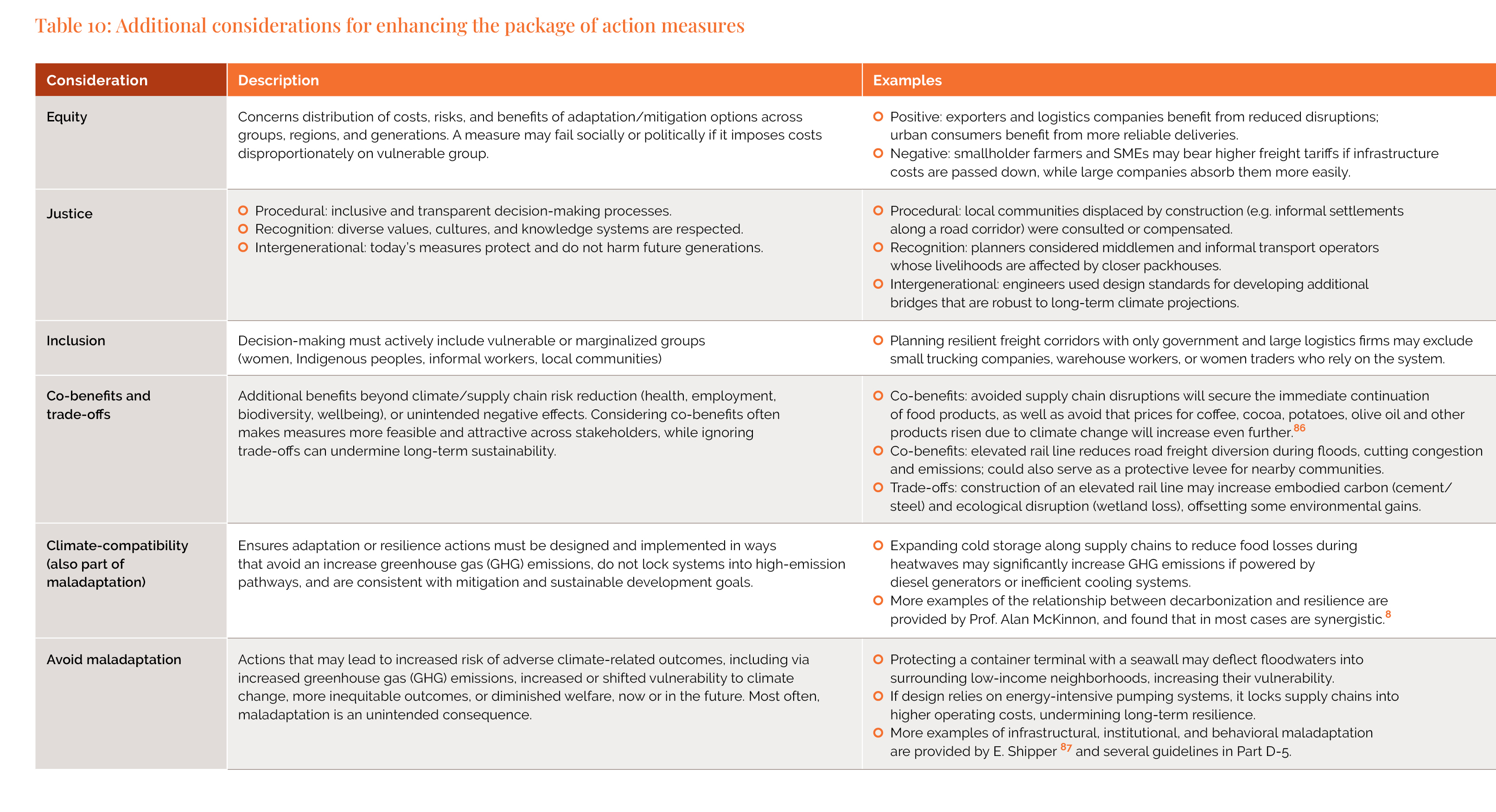
a. Apply maladaptation, equity and sustainability considerations
Cross-cutting considerations apply to both feasibility and effectiveness and are core elements of climate-resilient development. They ensure that options are not only doable and impactful, but also fair, inclusive, and sustainable. These considerations do not fit neatly into a single feasibility dimension, yet they influence all of them and are often difficult to capture through simple indicators.
For each action measure, assess whether these considerations are relevant and how they should shape the overall evaluation:
- Equity: who bears the costs and who benefits?
- Justice: are decisions fair, inclusive of diverse voices, and mindful of future generations?
- Inclusion: have marginalized or less powerful groups been actively involved?
- Co-benefits and trade-offs: what additional positive outcomes or unintended side effects arise?
- Climate compatibility: does the measure avoid increasing GHG emissions or lock in high-emissions activity?
- Maladaptation: could the measure increase vulnerability elsewhere or in the future?
Case Study Germany: Community and business inclusion in building long-term resilience after floods
b. Seek opportunities for decarbonization, sustainability and institutional measures
Actively seek out opportunities to complement resilience measures with additional actions that deliver decarbonization and wider sustainability benefits. In many cases, such opportunities stem from policies, projects and ideas already planned by stakeholders. Aligning these initiatives with resilience measures expands the overall impact, strengthens the investment case, and enhances partner commitment.
Scan for additional measures already planned or under consideration by stakeholders that can be linked to the critical link.
These may be vertical (integrated into the same link alongside a resilience measure) or horizontal (upstream or downstream but directly influencing the link). These complementary actions can deliver economic, environmental, and social benefits in addition to resilience, strengthening both the investment case and stakeholder commitment.
For example:
- A logistics service provider already planning to install solar panels on warehouses could combine this with floodproofing, or vice versa.
- Redevelopment of port infrastructure could integrate nature-based solutions, such as mangrove restoration, to provide storm surge protection and carbon benefits.
- Reinforcement of railway embankments to withstand heavier rainfall and flood risk could be paired with tree planting, adding slope stability and carbon sequestration.
- New packhouse facilities in avocado-producing areas could be designed with cooled storage powered by rooftop solar, reducing food loss and emissions while strengthening supply chain performance.
- A new railway line planned for regional connectivity could be equipped with reefer trains, as recently piloted between Nairobi and Mombasa,88 to enable temperature-controlled exports of fresh produce.
- A new packhouse could be designed for multi-use, for instance also serving as a community centre or school.
Identify institutional measures to supplement the package
These can be existing or new measures, such as those identified by UNECE:118
- Economic: contingency or disaster response funds; demonstrated resilience incentives; investment preconditions for new infrastructure; financial penalties; insurance requirements; grants and loans.
- Regulation: health and safety requirements; standards and codes of practice; non-compliance enforcement and penalties; legal protection for vulnerable habitats with risk reduction role.
- Policy and programmes: strategic adaptation planning (local/regional/international); zoning according to risk; set back, buffer area or relocation policies; build-back-better (or out-of- the-way) policies; diversification.
Alignment of resilience measures with existing national priorities can strengthen the package. For example, the Asian Transport Observatory highlights multiple examples of adaptation policies relevant to the transport sector, including climate-resilient planning and design, integrated land use and transport, updated infrastructure standards and codes, upgrading existing assets, nature-based solutions, emergency preparedness, digital strategies, and transport financing and investment planning.89
Make sure to evaluate how the identified measures reinforce the resilience objectives of the critical link, and that they do not inadvertently undermine them.
For example, solar-powered cold storage can reduce emissions while also improving reliability during power outages, and mangrove restoration in port redevelopment can enhance both storm protection and biodiversity. Similarly, shifting from diesel to electric trucks can cut emissions, but you must make sure charging points are not located in flood-prone areas and that the grid is reliable, otherwise the measure could increase rather than reduce vulnerability.
c. Safeguard and strengthen the package of proposed measures
Update the package developed under Step 2.2.c by incorporating the results of the safeguard checks (Step 2.3.a) and the additional opportunities identified (Step 2.3.b). Prioritization should focus on how well these opportunities build on initiatives already planned or under consideration by stakeholders, reinforce resilience objectives, and add wider benefits. Incorporating the strongest opportunities ensures the package is not only practical but also more persuasive for partners and financiers.
The outcome of this sub-step is an updated package of measures that has been safeguarded against maladaptation and inequities, and strengthened with the most compelling opportunities for decarbonization, sustainability and institutional strengthening. This ensures the package is both resilient and future-proof.