Part C. Life-Links Steps
Value Creation: Shared Resilience
The ultimate goal of Life-Links is “Resilient supply chains for good”,
as set out in its vision: to make supply chains that connect producers and consumers across the globe drivers of resilient climate action and local sustainable development.
In practice, this means supply chains that are more resilient, while also reducing emissions and supporting sustainability, with benefits shared across communities, companies, countries and consumers. The Implementation Plan leads to value creation, showing how agreed measures generate benefits for supply chains actors and stakeholders. While this follows step 3, the potential value is already relevant from the preparation in Step 0, when it helps bring partners on board and set expectations for collaboration and investment.
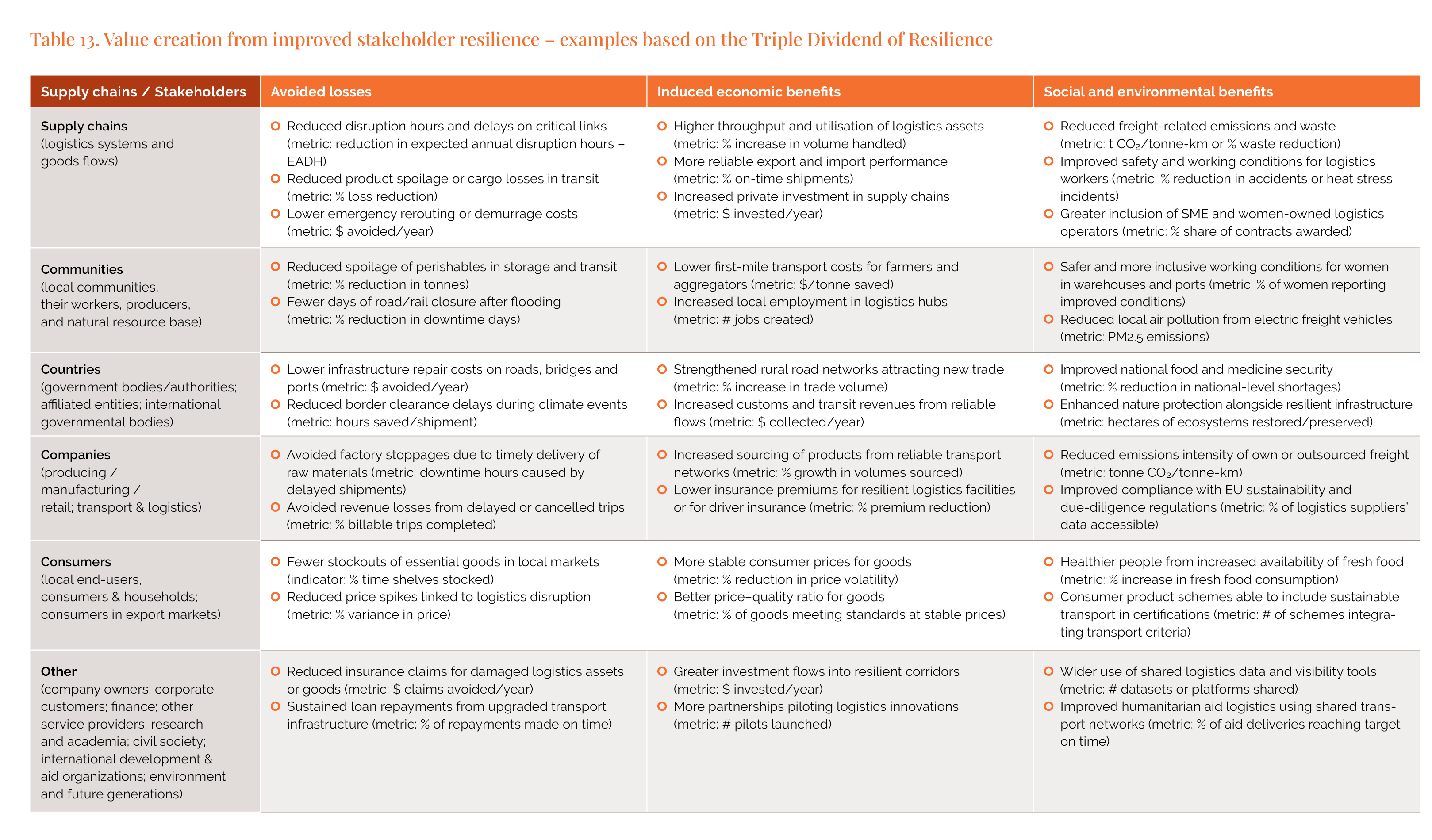
Value is created at two levels: supply chains and stakeholders (see Figure 13 and Table 13)
- Supply chain resilience is achieved through enhanced resilience of the logistics system and goods and products, reducing disruptions and delays and improving reliability and efficiency across networks, combined with co-benefits of reduced emissions and improved sustainability.
- Stakeholder resilience applies to key stakeholders in the real economy, including communities, countries, companies, consumers, and other stakeholders.
What makes this value creation possible is a shared interest in resilient supply chains. Through collaborative action, the outcome is shared resilience: everyone benefits when disruptions are reduced, when logistics systems continue to function under stress, when trade and supply are stabilized, and when social and environmental co-benefits are realized. The value for supply chains and stakeholders becomes tangible in the form of three types of benefits, known as the Triple Dividend of Resilience (TDR):
- Avoided losses – avoiding damages and losses from disruptions or disasters.
- Induced economic benefits – economic or development benefits that arise even when no disaster occurs.
- Social and environmental co-benefits – benefits that enhance community well-being and sustainability.
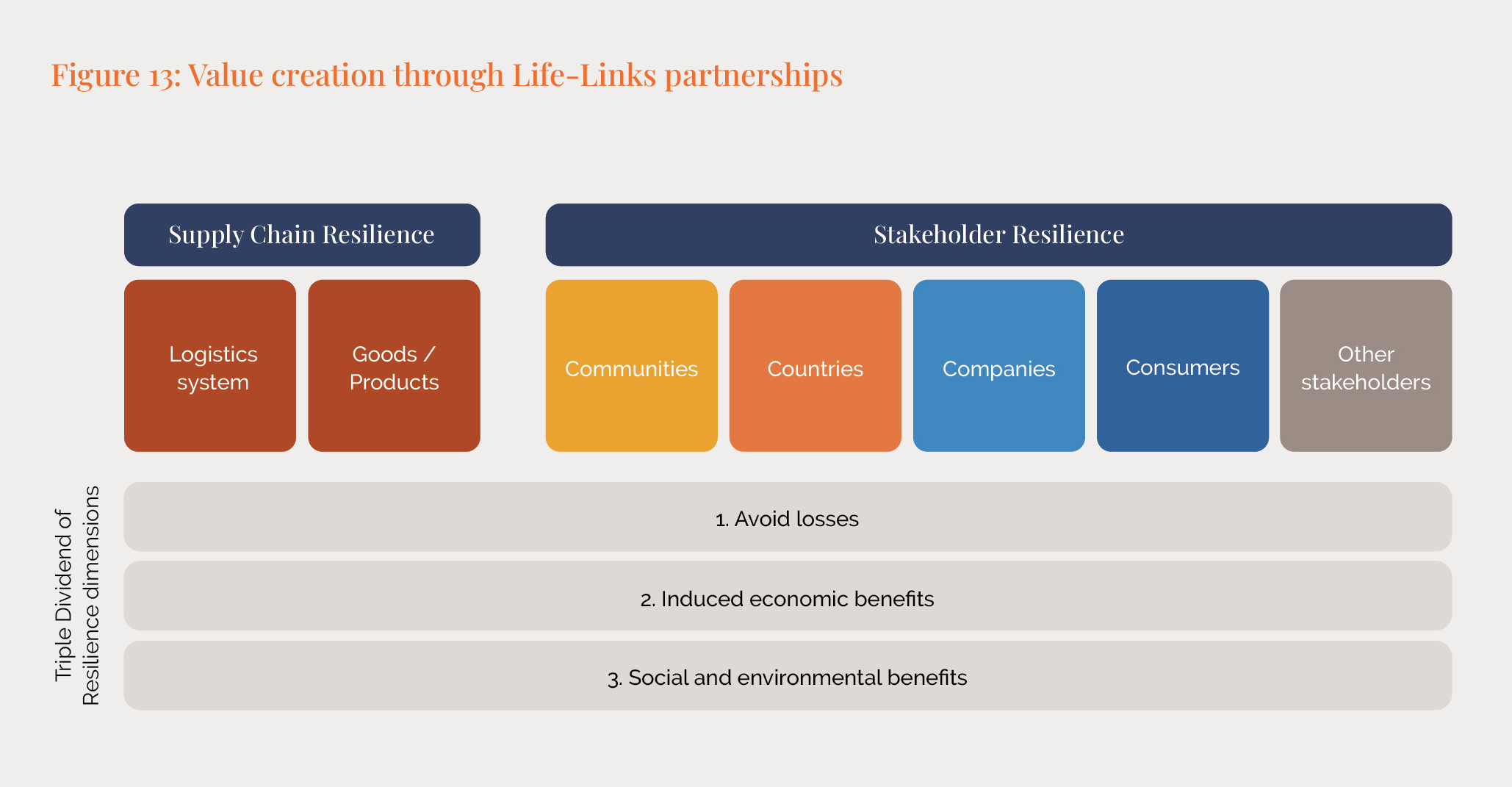
Table 13 gives examples of metrics/indicators that can be used to measure value at both the supply chain and stakeholder levels across the TDR.
 Case Study Middle Corridor: Upgrading for Resilient Rail Freight